

 عربى
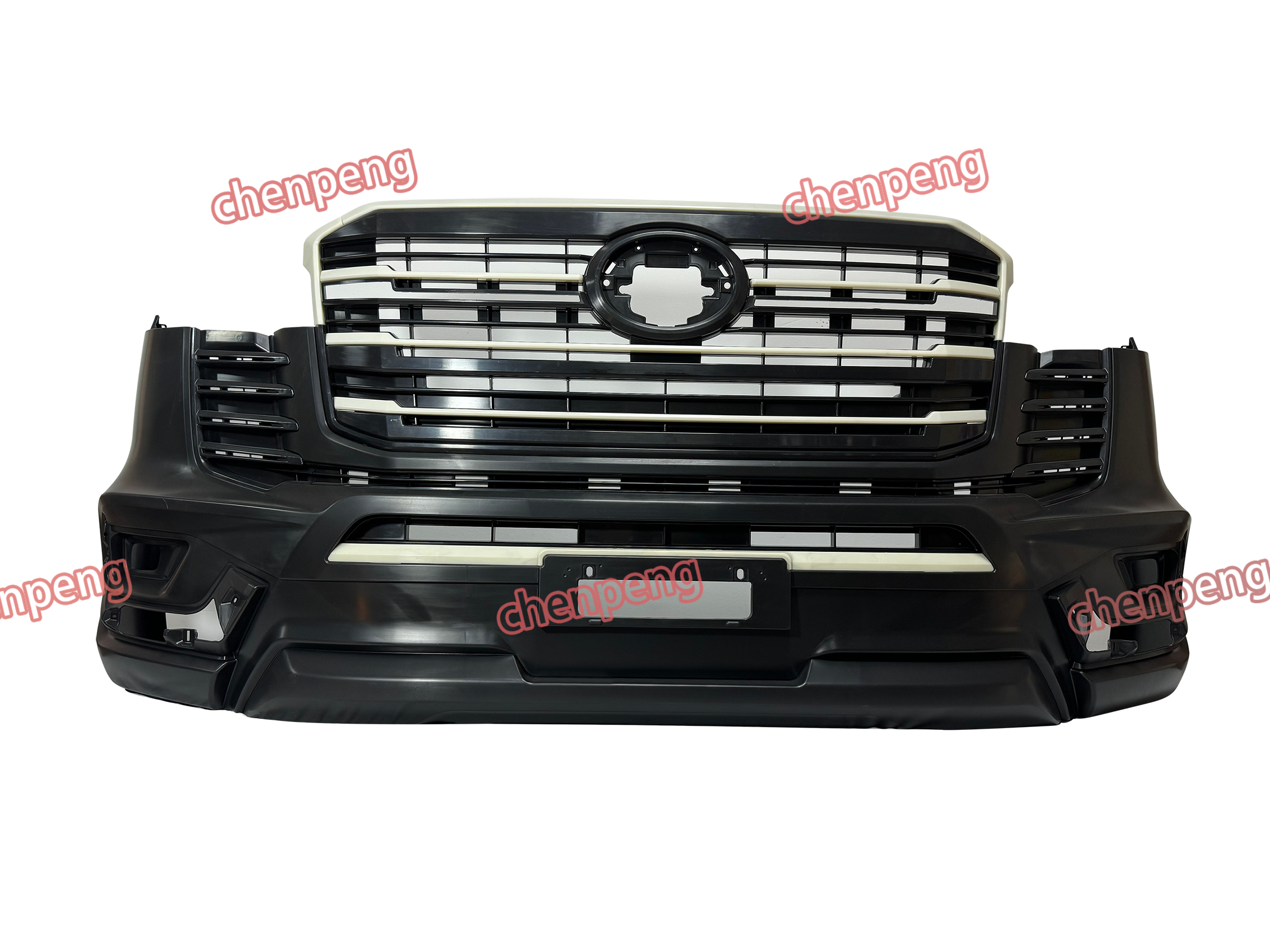
عربىThe front-end appearance of a vehicle often depends on how precisely the grille system is integrated with surrounding bumper components. Even a small deviation in alignment can create visible gaps that affect both aesthetics and airflow behavior. Issues related to middle grille mould fitment are frequently linked to structural tolerance, mounting accuracy, and material behavior under stress.
Alignment gaps are not always the result of defective parts. In many cases, they originate from the interaction between bumper reinforcement, grille clips, and injection-moulded plastic deformation. Modern front-end assemblies rely on layered plastic structures where millimetre-level mismatch becomes visually amplified.
Understanding Why Alignment Gaps Appear
Gap formation around grille areas usually comes from multiple overlapping technical factors rather than a single cause. Each component contributes to final positioning stability.
- Injection shrink variation – Thermoplastic cooling during production can cause uneven contraction, slightly altering panel geometry.
- Clip tension loss – Repeated installation or removal weakens locking tabs, reducing holding force on the grille frame.
- Bumper bracket drift – Minor shifts in bumper reinforcement position can propagate alignment errors across the entire front fascia.
- Assembly sequence deviation – Improper tightening order of fasteners can lock panels in slightly skewed positions.
Role of Manufacturing Tolerances in Front-End Fitment
Automotive exterior components are designed with tolerance ranges rather than absolute dimensions. Even OEM parts may vary by a few millimetres due to tooling wear or batch differences. Once installed, these variations accumulate across mounting points.
A middle grille mould typically connects to multiple interfaces, including bumper cover ribs, radiator support guides, and decorative trim frames. Each interface introduces micro-level deviation potential. Combined, these deviations create visible spacing inconsistencies.
Aftermarket components exacerbate this issue because mould shrinkage rates vary with resin composition and cooling conditions. A small distortion in curvature can shift grille edges away from adjacent bumper contours.
Structural Interaction Between Bumper and Grille System
The grille does not function as an isolated component. It is mechanically dependent on the bumper cover and internal reinforcement structure. Even slight bumper flex affects grille positioning.
- Upper latch engagement controls vertical seating of the grille frame.
- Side guide rails determine lateral centering accuracy.
- Lower support lip stabilizes outward bulging under airflow pressure.
Any imbalance across these three points can result in uneven visual spacing. A misaligned bumper edge often magnifies grille offset, even if the grille itself remains structurally intact.
Material Behavior Under Heat and Stress
Plastic components respond dynamically to temperature changes. Heat exposure from engine bays and sunlight can soften mounting tabs, allowing minor repositioning over time. Once cooled, the part may retain a slightly altered shape.
This phenomenon explains why alignment gaps sometimes appear after driving rather than immediately after installation. Repeated thermal cycling gradually modifies stress distribution across mounting points.
In certain cases, vibration from road surfaces also contributes to micro-movement between clip interfaces. This movement is often too small to notice individually but becomes visible as uneven spacing at grille junctions.
Installation Factors That Influence Gap Formation
Assembly sequence plays a critical role in final alignment quality. Even correctly manufactured components can show spacing issues if installed under uneven load conditions.
- Center-first locking imbalance may force side edges outward slightly.
- Over-tightened fasteners can distort bumper curvature around grille edges.
- Unseated clip engagement prevents full compression of mounting points.
Technicians often correct these issues by loosening and re-seating components in a controlled sequence rather than applying additional force. The goal is to allow natural alignment rather than forcing geometry correction through pressure.
Dimensional Sensitivity of Modern Front Fascia Design
Contemporary vehicle styling emphasizes narrow, uniform panel spacing. While visually appealing, this design approach reduces tolerance buffer between components. A deviation as small as 1–2 mm becomes noticeable along grille borders.
This sensitivity explains why alignment issues are frequently reported even on new installations. The system is not necessarily faulty; it is simply less forgiving to deviation compared with older, wider-gap designs.
In practice, achieving consistent spacing requires the coordinated alignment of the bumper skin, grille frame, and support structure as a unified system rather than as independent parts.
Diagnostic Perspective on Gap Irregularities
Evaluating alignment gaps requires separating cosmetic perception from structural deviation. A uniform gap across all sides usually indicates acceptable tolerance behavior. Uneven spacing often signals localized mounting stress or bracket displacement.
Inspection typically focuses on:
- Symmetry between left and right grille edges
- Contact consistency along bumper interface points
- Clip engagement depth across mounting tabs
These indicators help determine whether the issue originates from component design variation or installation-induced misalignment.
Alignment gaps around grille assemblies are the result of interconnected mechanical, material, and assembly variables. A middle grille mould functions within a tightly constrained system where even minimal deviation can affect visual uniformity. Understanding tolerance behavior, mounting interaction, and structural dependency provides a clearer explanation than assuming single-point failure.
Instead of treating gaps as isolated defects, they are better understood as outcomes of system-level interaction across multiple front-end components.
 +86-18357617666